

Berkeley has long been at the forefront of environmental sustainability, implementing initiatives that address climate change and promote a healthier community. Key areas of focus include building electrification, zero waste programs, and climate resilience planning.
Building Electrification
The City of Berkeley is actively encouraging residents to transition from gas-powered appliances to electric alternatives. This shift aims to improve indoor air quality, reduce greenhouse gas emissions, and enhance grid resiliency. Programs like the Just Transition Pilot offer home electrification upgrades to income-qualified residents, ensuring equitable access to these benefits. Additionally, the Climate Equity Pilot promotes building and transportation electrification for income-qualified residents and elevates community voices through various program areas.
Zero Waste Initiatives
UC Berkeley is committed to achieving zero waste by diverting materials from landfills through recycling, composting, and reuse. The campus currently diverts about 54% of its municipal solid waste stream. Students can participate in the Zero Waste Coalition, which brings together various campus organizations to collaborate on waste reduction projects and foster a zero waste community.
Climate Resilience Planning
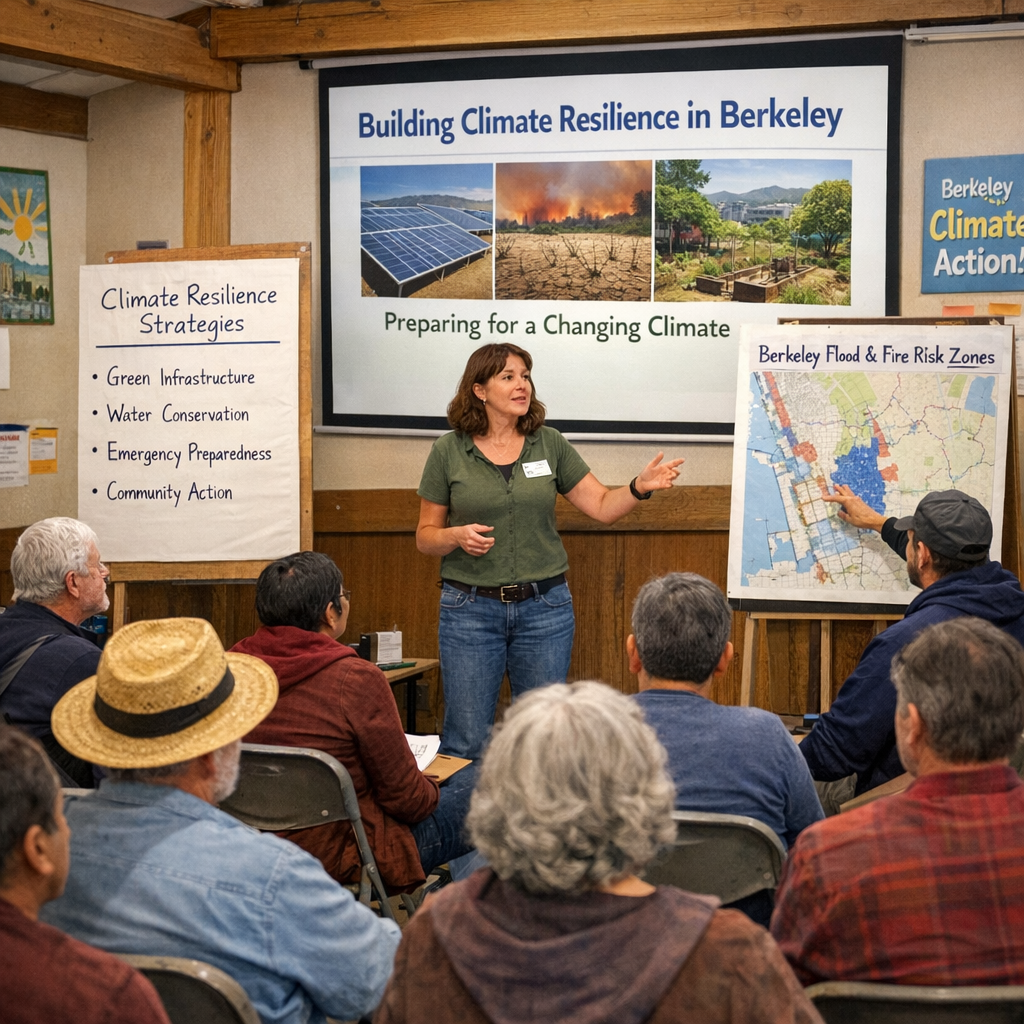
Recognizing the increasing risks associated with climate change, Berkeley is developing plans to enhance community resilience. The “Prepared, Safe, and Healthy Berkeley for All” initiative seeks public input to create equitable and measurable goals for disaster preparedness and climate adaptation. This effort focuses on ensuring that all community members, especially historically underserved populations, are included in the city’s resilience strategies.
Through these initiatives, Berkeley continues to lead by example, demonstrating that community engagement and proactive planning are essential for building a sustainable and resilient future.